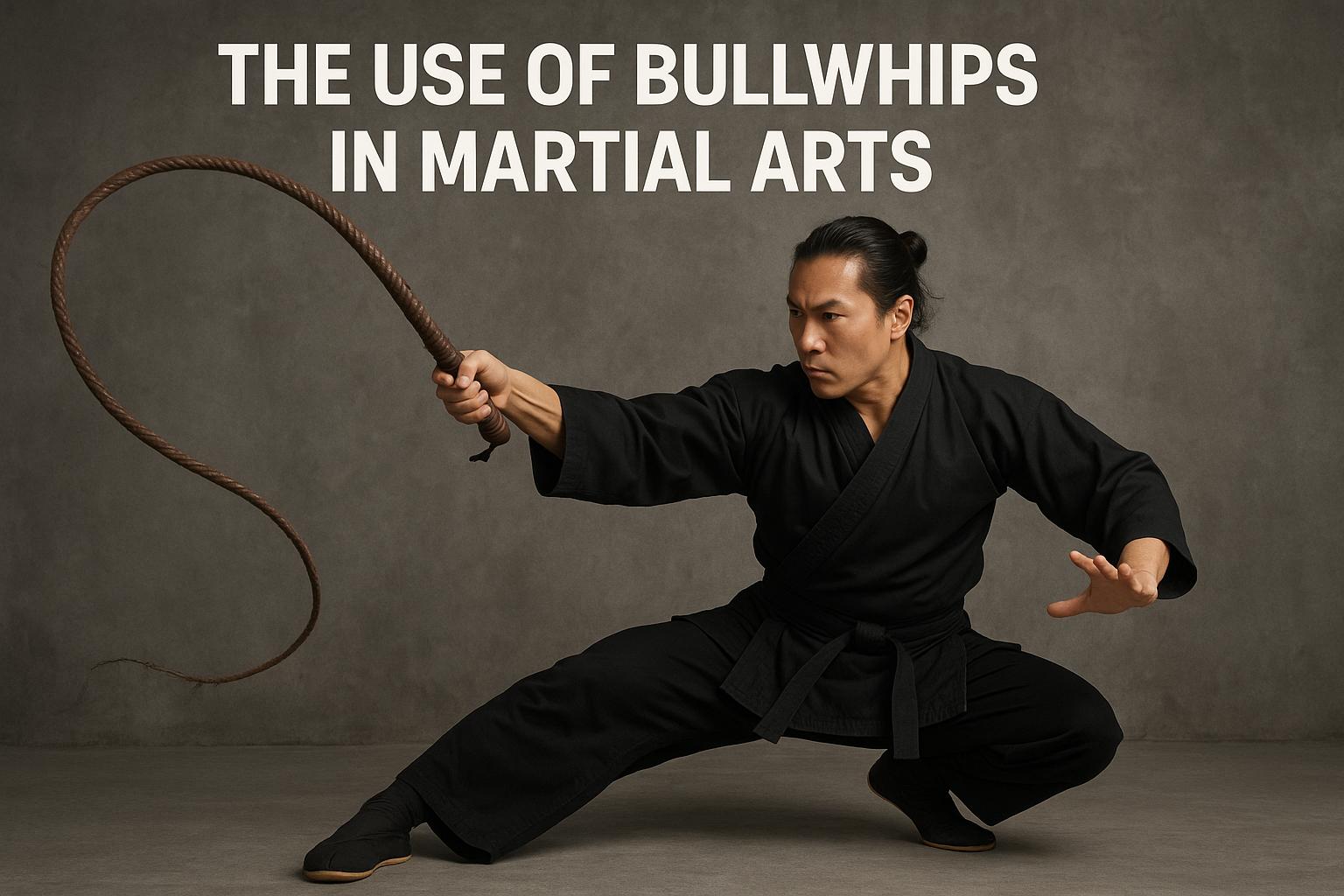
The use of bullwhips in martial arts.
Introduction to Bullwhips in Martial Arts
The use of bullwhips in martial arts is a practice that combines the precision, skill, and discipline found in traditional martial arts with the unique capabilities of the bullwhip. This tool, traditionally associated with herding cattle, has found a niche in certain martial arts disciplines where it is employed both as a practical tool and a performance instrument.
Origin and History
Bullwhips have long been part of various cultures, primarily used in agriculture. However, their application in martial arts emerged as practitioners explored the whip’s potential beyond agricultural work. The whip’s ability to create a sharp, loud crack by breaking the sound barrier when handled correctly made it a compelling choice for martial artists looking to expand their skills.
The Evolution of Bullwhips
Bullwhips were first seen in the context of livestock management. As cultural interaction increased over the centuries, the evolution of societies brought an exchange of tools and techniques, including weapons and items that could be adapted for fighting and display. Over time, the bullwhip transitioned from an agricultural implement to an intriguing element in the martial arts arsenal, especially as performers and practitioners began to appreciate its dramatic flair and the complexity of skill required to master it.
Integration in Martial Arts
Martial artists use bullwhips for various purposes, from self-defense to performance art. Training with a bullwhip requires a deep understanding of its mechanics and a strong focus on precision and timing. These elements are essential in martial arts training, making the bullwhip a valuable tool for enhancing one’s overall discipline and technique.
The Unique Skillset of Whip Artistry
Training with a bullwhip accentuates skills that are intrinsic to martial arts: dexterity, focus, and control. Practitioners say it fosters a deeper connection between the mind and body. Training begins with basic movements, progressing to complex routines that mirror the intricacies found within forms of unarmed combat.
Techniques and Practices
Techniques in using a bullwhip can vary greatly depending on the practitioner’s martial arts background. Common practices include:
Cracking: This involves creating a loud crack by moving the whip at high speed, which requires impeccable control and timing. The sound is produced when the whip’s tip breaks the sound barrier, and this action serves as a demonstration of the practitioner’s skill in controlling both speed and force.
Target Practice: Practitioners often train by hitting specific targets, thereby improving accuracy and focus. Advanced practitioners may incorporate movement patterns to challenge themselves by engaging in dynamic target practice scenarios.
Kata or Forms: Similar to other martial arts weapons, practitioners may perform set forms or kata, combining whip movements with footwork and body control. These routines help to synchronize the mind’s focus with the fluidity and precision required for effective whip handling.
Interdisciplinary Application
A remarkable aspect of the bullwhip in martial arts is its ability to cross over into different disciplines beyond martial arts. It is frequently featured in theatrical performances, where dramatic flair adds to storytelling. This crossover has popularized the whip within the entertainment industry, with many performers integrating whip skills into circus acts or shows. Martial artists adapting these performance elements improve their ability to engage audiences and sharpen their reflexes and timing.
Safety Considerations
While exciting, training with a bullwhip requires strict adherence to safety guidelines to prevent injury. Practitioners should always wear protective gear, including safety goggles, to prevent accidental lashes. It is also crucial to train in open spaces and maintain a safe distance from others to minimize the risk of mishaps. Regular inspection of equipment is necessary to ensure the whip is in good condition to avoid failures during practice. Further, receiving guidance and techniques from experienced trainers helps beginners avoid common pitfalls.
The Community and Resources
The community surrounding bullwhip enthusiasts in martial arts is a vibrant mix of traditionalism and innovation. Dedicated forums and clubs offer venues where practitioners can exchange knowledge and refine their skills under the mentorship of seasoned artists. For those interested in exploring this unique aspect of martial arts, numerous schools and instructors provide specialized training in bullwhip techniques, allowing martial artists to expand their skillsets.
The sharing of resources—such as books, online tutorials, and interactive sessions—enables individuals from various parts of the world to unite in honing their craft. Martial arts expos often feature exhibitions where bullwhip experts demonstrate their prowess, providing inspiration and encouragement for those new to the discipline.
The Bullwhip’s Future in Martial Arts
As martial arts continues to evolve, the integration of unique instruments like the bullwhip showcases how tradition can merge with modern practices. The adaptability and versatility of the bullwhip may see its inclusion expanded, not just as an exotic practice but as a staple element contributing to the refinement of motion and mental acuity in martial artists worldwide.
Moreover, technological advancement may influence the design and material of bullwhips, potentially creating safer and more efficient models, propelling their use in both training and performance contexts.
For further reading on martial arts and tools, you can explore resources for in-depth information. Meanwhile, practitioners can continue to enjoy the profound satisfaction and skill development accompanying their journey into bullwhip artistry within martial arts.