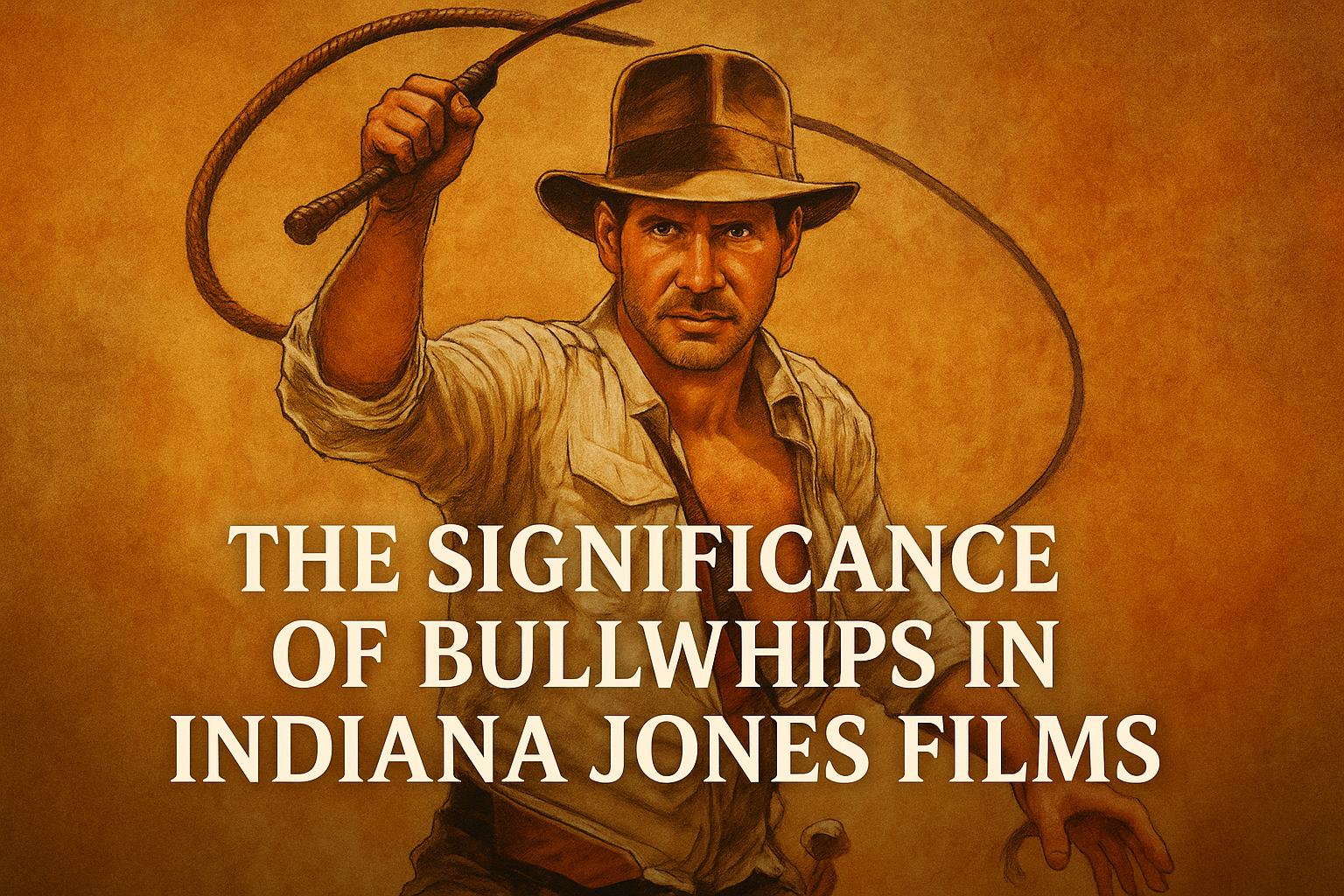
The significance of bullwhips in Indiana Jones films.
Introduction to Indiana Jones and His Iconic Bullwhip
The Indiana Jones film series is renowned for its thrilling adventures, exotic settings, and engaging storylines. Among the numerous iconic elements associated with Indiana Jones, the bullwhip holds a distinctive place. This tool, wielded expertly by the character, is not just a weapon or a means of performing stunts; it symbolizes the unique brand of archaeology and adventure epitomized by Jones himself.
The Bullwhip as a Symbol of Indiana Jones
In the context of the films, the bullwhip serves multiple symbolic roles. It represents the fusion of old-world exploration and modern action-hero bravado. For Indiana Jones, the whip embodies the spirit of adventure, resourcefulness, and inventiveness. Unlike traditional weapons, the bullwhip requires skill, precision, and practice to master, showcasing Jones’s capability and ingenuity.
Practical Utilization in the Films
Beyond its symbolic meanings, the bullwhip is frequently employed in practical ways throughout the series. Indiana Jones uses it to swing across chasms, disarm adversaries, and manipulate objects out of reach. This multifaceted utility highlights the whip’s practicality in situations where traditional weapons might be deemed inappropriate or inefficient. For instance, in Raiders of the Lost Ark, the whip is used to retrieve items and engage with environmental challenges, enhancing Jones’s mobility and adaptability.
Indiana Jones and the Temple of Doom, another installment in the series, further explores the utility of the bullwhip. The film illustrates scenarios where Jones relies on his whip for survival, emphasizing the necessity of this tool in dire situations. Whether evading perilous traps or battling enemies in close quarters, the whip provides a tactical advantage, emphasizing Jones’s quick thinking and mastery over his environment.
Filmmaking and the Action Genre
The inclusion and frequent use of the bullwhip also serve a cinematic purpose. It contributes to the distinctive visual and action style of the Indiana Jones franchise. The whip adds flair to action sequences, providing a dynamic range of movement and moments of tension where Jones relies not on brute force but on skill and timing. This aligns with the adventurous and often unpredictable narrative style that characterizes the series.
Filmmakers, by incorporating the bullwhip, create a visual spectacle that appeals to audiences seeking excitement and novelty. The whip sequences are choreographed to perfection, crafting an intense and immersive experience for the viewer. The bullwhip’s crack resonates with a sense of authenticity, pulling the audience into the heart of the action. The fluid motion of the whip becomes an extension of Indiana Jones himself, deftly maneuvered to navigate the complexities of his thrilling world.
Craftsmanship and Tradition are further embedded themes in the films, reflected in the choice of the bullwhip, a tool with historical significance. The filmmakers pay homage to earlier eras of cinema, particularly the adventure serials of the early 20th century. The bullwhip stands as a bridge between eras, imbuing the modern films with a touch of vintage authenticity.
A Connection to History and Culture
The bullwhip is not merely an invention of cinema; it is rooted in history and culture. Whips have traditionally been tools of the cattle industry, used by ranchers and cowboys for herding purposes. By selecting the bullwhip, the filmmakers connected Indiana Jones with a long tradition of exploration and frontier spirit, aligning him with a legacy of trailblazers and pioneers.
In Indiana Jones and the Last Crusade, this connection to history is further explored. As the film delves into themes of legacy and tradition, the bullwhip serves as a tangible link between the past and present. Jones’s mastery of the whip reflects his understanding and respect for historical artifacts, reinforcing his role as a protector of heritage and historical truth.
Conclusion
In summary, the bullwhip plays a notable role in the Indiana Jones films, far surpassing its function as a mere tool. It symbolizes the essence of adventure and resourcefulness synonymous with the character. Whether serving as a problem-solving device in tense scenarios or adding flair to the film’s action sequences, the bullwhip is an integral component of the legendary appeal of Indiana Jones. This continuation of tradition and innovation ensures the bullwhip’s place in the cultural lexicon as an indelible symbol of cinematic adventure.
The bullwhip is part of a broader cinematographic language that communicates Indiana Jones’s character to the audience. It illustrates his complexity as an action hero, bridging the gap between the intellectual world of archaeology and the physically demanding demands of his quests. By utilizing this tool, Indiana Jones transcends the boundaries of conventional heroism, becoming an icon of an era where intellect and brawn coalesce to confront the unknown.
As the franchise evolves, the bullwhip remains a constant, reminding audiences of Jones’s legacy and the timeless narratives of exploration and adventure it perpetuates. It is more than a prop; it is a symbol woven into the fabric of Indiana Jones’s identity and the exciting world he inhabits, a testament to the enduring allure of his adventures.