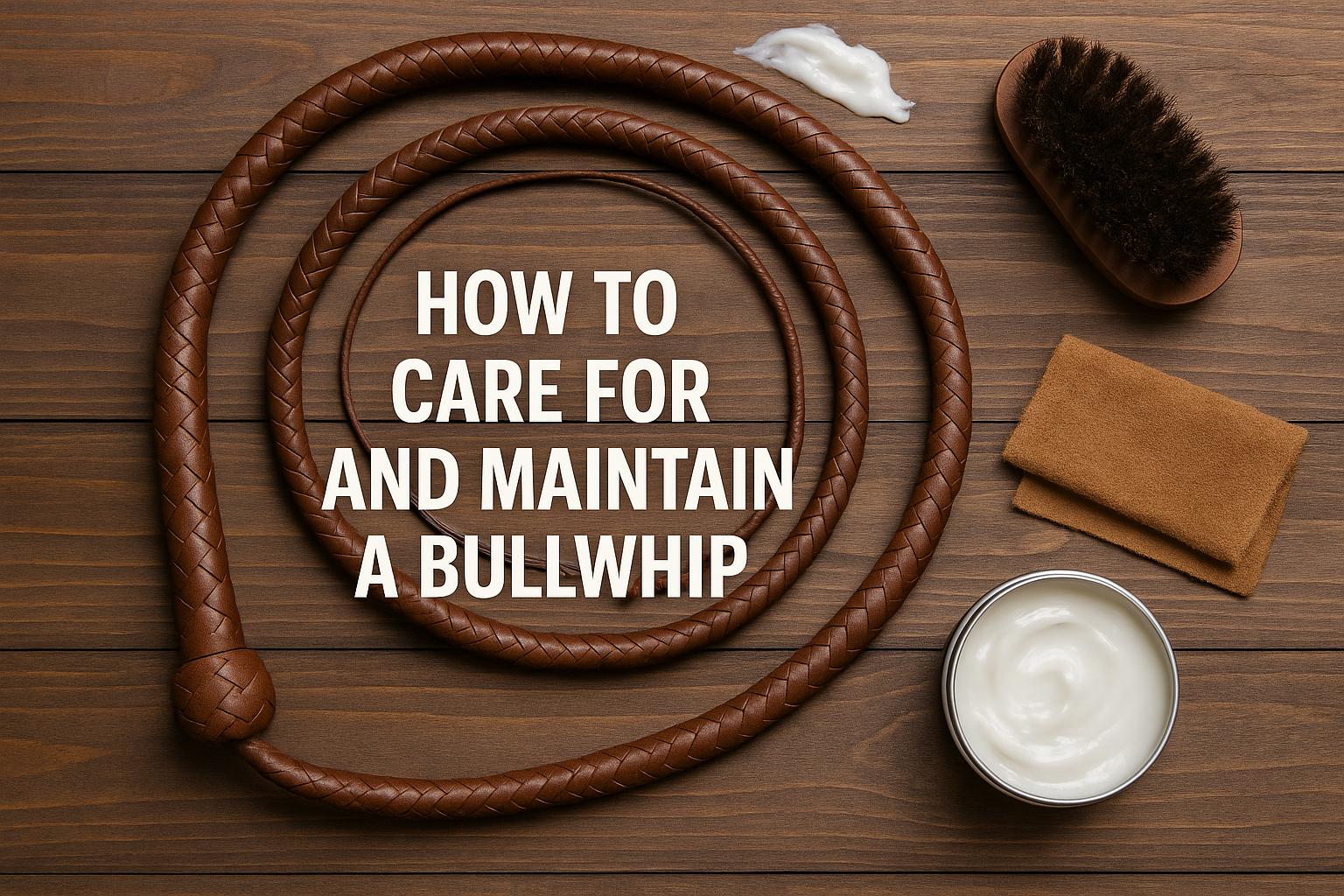
How to care for and maintain a bullwhip.
Understanding Bullwhip Materials
Understanding the material composition of a bullwhip is a critical step before delving into its maintenance. Typically, bullwhips are crafted from leather, nylon, or synthetic materials, each presenting its distinct set of care requirements and nuances.
Leather Bullwhips
Leather bullwhips demand the most meticulous attention, primarily due to their vulnerability to environmental influences such as humidity and temperature fluctuations. The inherent nature of leather makes it susceptible to drying out and cracking if not well-maintained. To preserve leather bullwhips, it is crucial to keep the leather adequately oiled. Regular conditioning with a high-quality leather conditioner not only prevents drying but also helps maintain the whip’s vital flexibility and suppleness. During application, using a soft cloth is recommended to ensure even distribution of the conditioner, thereby safeguarding the integrity of the leather.
Nylon and Synthetic Bullwhips
In contrast, nylon and synthetic bullwhips are renowned for their durability under a variety of conditions and rigorous use. They are less demanding in terms of maintenance compared to their leather counterparts. Nevertheless, regular cleaning to remove accumulated dirt and debris remains essential as such elements can impede the whip’s performance significantly over time.
General Maintenance Tips
To extend the lifespan and maintain the performance of a bullwhip, some general maintenance practices should be followed, regardless of the material composition.
Regular Cleaning
It is a recommended practice to clean the bullwhip after each use. This process aids in removing any dirt and moisture that could potentially degrade the whip over time. For leather bullwhips, a damp, soft cloth is useful for wiping away any accumulated debris. Importantly, ensure the whip is entirely dry before storing it. Conversely, for nylon whips, a simple rinse with water followed by air drying typically suffices, given their robust nature.
Conditioning and Oiling
Leather bullwhips benefit from regular conditioning. A thin layer of high-quality leather conditioner should be applied to the whip, ensuring even distribution with the aid of a soft cloth. This practice not only preserves but also enhances the leather’s durability and aesthetics. On the other hand, nylon and synthetic whips do not necessitate conditioning, as their synthetic composition provides intrinsic resilience and requires less intensive care.
Storage
Correct storage plays a pivotal role in preserving the condition of a bullwhip. Identifying a cool, dry place, shielded from direct sunlight or heat sources, is essential for storage. Exposure to heat can instigate deterioration of the material. Utilizing a whip hanger or a dedicated storage box is recommended to maintain the whip’s natural curve and prevent the formation of kinks, which can compromise its structural integrity and functionality over time.
Inspecting for Damage
Regular inspections are indispensable for verifying the integrity and functionality of a bullwhip. This practice is particularly crucial for leather bullwhips, where visible signs of wear and tear, such as cracks, dryness, or soft spots, should be closely monitored. For nylon and synthetic whips, examining the braiding for wear or any frayed areas is advisable. Swift action to address any identified issues can prevent further deterioration and extend the whip’s lifespan.
Repair and Replacement
In instances of minor wear, particularly in leather bullwhips, regular conditioning may remedy the situation. However, should significant damage occur, professional repair services might be necessary to restore the whip to its optimal condition. If damage is extensive or impairs the whip’s performance, replacement becomes a viable option to ensure both safety and effectiveness. It is vital to prioritize user safety and the intended performance of the whip, making replacement a practical consideration when repairs are not feasible.
Additional Resources
For a more comprehensive understanding of bullwhip maintenance, numerous resources are available from professional whip makers and dedicated whip care websites. The internet hosts a wealth of tutorials and advice from specialists, each offering valuable insights into preserving a bullwhip’s function and longevity.
Click here for a comprehensive bullwhip care guide.
By integrating these practices into regular routines, users can ensure that their bullwhips remain in pristine condition, thereby guaranteeing optimal performance and extended longevity. This proactive approach to bullwhip care is a testament to the commitment to preserving the integrity and functionality of these intricate tools, ultimately enhancing the user experience and safety.